
Ginseng Tea: Benefits, Side Effects, Types & How to Brew (Complete Guide)
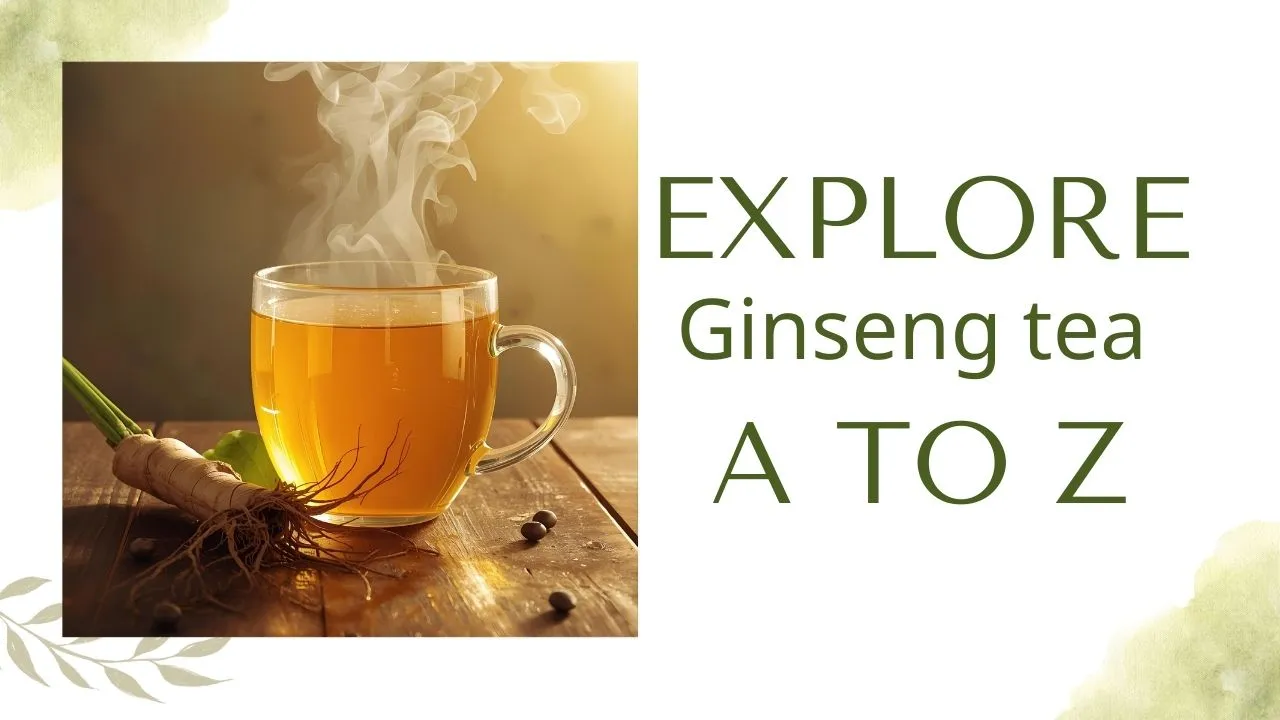
Ginseng tea is a type of herbal infusion made from the root of the Panax ginseng plant (or related species such as American ginseng). Unlike traditional teas derived from tea leaves, ginseng tea is leaf-free. It’s made by steeping, simmering, or decocting ginseng root (fresh, dried, powdered, or sliced) to extract its unique compounds.
1. What Does Ginseng Tea Taste Like?
2. Types of Ginseng Tea
3. How Ginseng Tea Works
4. Health Benefits of Ginseng Tea
5. Uses of Ginseng Tea

6. Ginseng Tea for Weight Loss
7. Ginseng Tea vs Other Teas
8. Side Effects of Ginseng Tea

9. Who Should & Shouldn’t Drink Ginseng Tea
1. What Does Ginseng Tea Taste Like?
2. Types of Ginseng Tea
3. How Ginseng Tea Works
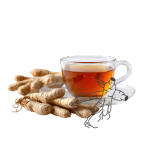
4. Health Benefits of Ginseng Tea
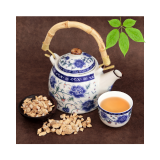
5. Uses of Ginseng Tea
6. Ginseng Tea for Weight Loss
7. Ginseng Tea vs Other Teas
8. Side Effects of Ginseng Tea
9. Who Should & Shouldn’t Drink Ginseng Tea
Historically, ginseng has been valued across East Asia (especially in regions of modern-day China, Korea, and neighboring countries) as an esteemed medicinal herb. For over two millennia, its root has been used in traditional medicine, not only for making teas but also for tonics, herbal remedies, and natural remedies for fatigue, weakness, and general wellness.
In modern times, ginseng tea has seen a resurgence in popularity worldwide. As more people seek natural, holistic health-supporting beverages, ginseng tea appeals to those seeking gentler alternatives to coffee or other caffeinated drinks. Its alleged benefits, such as boosting energy, supporting immunity, improving circulation, and helping with mental focus, make it especially attractive in today’s fast-paced, stress-filled lifestyles.
In short, ginseng tea is much more than just a warm drink. It’s a centuries-old herbal tradition, rooted in ancient medicine, now rediscovered by modern wellness seekers as a natural path to vitality, energy, and overall well-being.
Ch = 01
What Does Ginseng Tea Taste Like?
Have you never tried ginseng tea before? The first sip might surprise you, in a good way. As someone who genuinely enjoys exploring different teas, I can tell you that ginseng tea has a very distinct personality, seriously. It’s not like green tea, and not like herbal mint teas either. It stands in its own category.
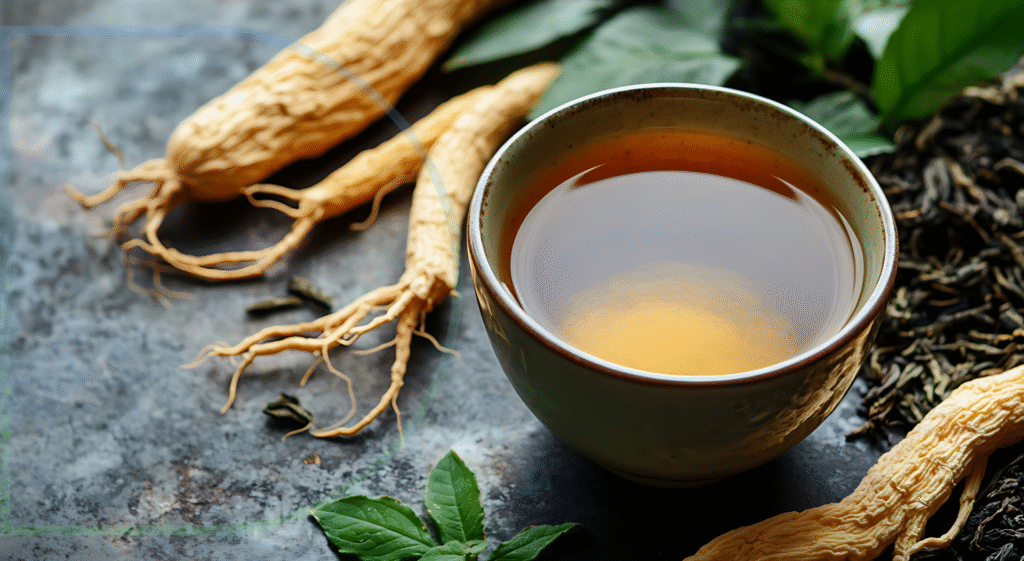
Flavor Profile
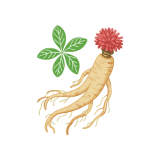
Ginseng tea has a naturally earthy, slightly sweet, and subtly bitter taste.
- The earthiness comes from the root itself (you can actually smell it before you sip).
- The sweetness is gentle and natural, not sugary, just softly sweet.
- The bitterness comes through at the end, but not harshly. It feels more like a herbal bite that wakes you up.
The best way to describe it?
Imagine the warmth of ginger tea, the earthiness of licorice root, and a mild bitterness like green tea, all blended. It’s grounding, comforting, and energizing at the same time.
Taste Differences Between Korean, American & Siberian Ginseng
One of the most interesting things about ginseng tea is how different each type tastes. After trying all three, here’s how I’d describe them:
1. Korean Red Ginseng (Panax ginseng)
Strong, warm, bold
- More intense flavor
- Slightly spicy undertone
- More bitterness compared to the others
- Very energizing, you feel the “kick.”
Do you like bold teas (oolong, matcha, or strong herbal blends)? Korean ginseng will feel powerful and satisfying.
2. American Ginseng (Panax quinquefolius)
Milder, smoother, cooling
- Naturally sweeter
- Softer flavor, less bitterness, milder, sweeter,
- Has a “cooling” sensation
- More calming than stimulating
Think of it as the gentler, more refreshing cousin, great for beginners.
3. Siberian Ginseng (Eleuthero)
Herbal, woodsy, slightly peppery
- Not true “ginseng” but used similarly
- Neutral, balanced flavor; primarily earthy and woody, with notes of mild bitterness and a subtle, lingering sweetness.
- Less sweet
- More herbal and woody
Ashwagandha or rhodiola blends, this one feels similar, grounded, and rustic.
What Beginners Should Expect
If you’re trying ginseng tea for the first time:
- It will taste earthier than regular tea.
- Don’t expect the floral smoothness of black tea or the grassy lightness of green tea. This is more root-based and grounding.
- The sweetness is natural, not sugary.
- Many beginners add honey the first time, and honestly, it pairs beautifully with ginseng.
- It gives a warm, energetic feeling.
- Even before the effects kick in, the flavor itself feels warming and awakening.
- You may notice a light bitterness at the end.
- Totally normal, and it becomes pleasant once you get used to it.
- Brew strength changes everything.
- A short steep is mild and sweet.
- A long steep is strong, earthy, and bold.
- So beginners usually love it light to medium strength.
How to make ginseng tea taste better?
Ginseng tea has a naturally earthy, slightly bitter flavor, but you can easily enhance it. Add honey, lemon, or ginger to balance bitterness and add natural sweetness. Cinnamon, mint, or a splash of apple juice can also make it more enjoyable. Using fresh or high-quality dried ginseng slices rather than instant powders significantly improves flavor. Steeping slowly rather than boiling aggressively brings out smoother notes.
What foods pair well with ginseng?
Ginseng tea pairs well with light, nutritious foods that complement its earthy flavor, like salads, steamed vegetables, oatmeal, or lightly grilled chicken/fish. Sweet additions like fruits, honey, or nuts also harmonize nicely. Avoid overly spicy or greasy foods immediately after drinking ginseng, as they can overpower its subtle taste and reduce nutrient absorption.
Ch = 02
Types of Ginseng Tea
Different regions, different roots, and different processing styles yield distinct flavors and effects. Over the years, I’ve tasted almost every type from strong Korean red ginseng to the cooler, gentler American ginseng, and each one has its own character.
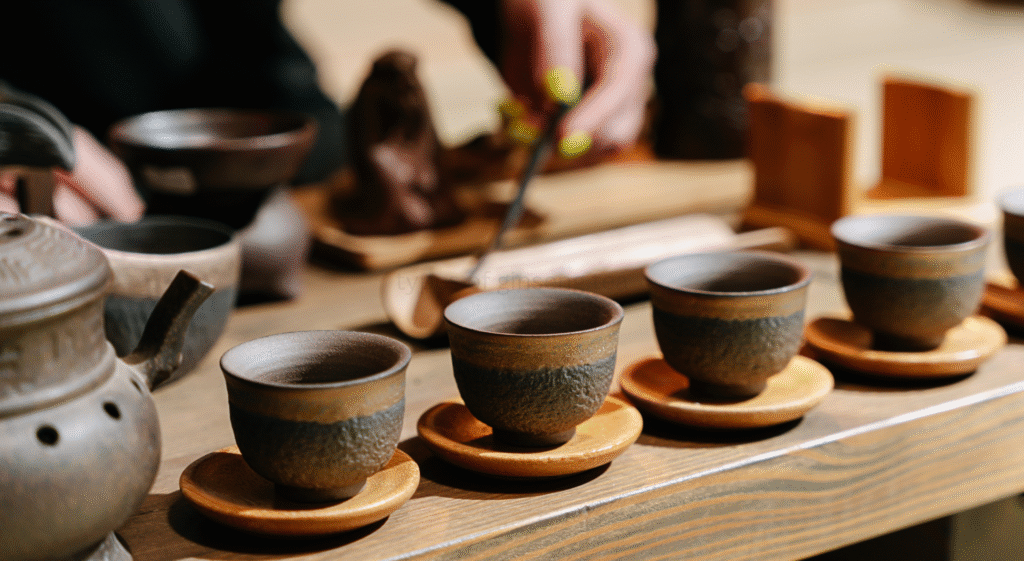
1. Korean Red Ginseng Tea (Panax ginseng)
Korean red ginseng tea stands out as the most energizing and bold option among ginseng teas.
It has a deep, earthy flavor with a warm, spicy kick — almost like ginger mixed with bitters.
From my experience:
- The aroma hits you the moment the hot water hits the root.
- The taste is strong but satisfying, especially if you enjoy robust teas like oolong or matcha.
- It gives a noticeable “wake-up” feeling, not jittery like caffeine, but a warm boost of vitality.
This is the go-to ginseng in Korean traditional medicine, famous for boosting energy, stamina, and circulation.
2. American Ginseng Tea (Panax quinquefolius)
American ginseng is notable for being cooler, milder, and sweeter than Korean red ginseng, with a cucumber-like freshness.
When I drink it:
- It feels soothing rather than stimulating.
- The sweetness is gentle and comforting.
- There’s very little bitterness, which makes it perfect for beginners.
In traditional Chinese medicine, American ginseng is considered yin (cooling), meaning it’s great for calming the body and mind.
3. Siberian Ginseng Tea (Eleuthero)
Siberian ginseng, though not a true ginseng, is mainly used for energy and stress support and has a more woodsy, herbal, and slightly peppery taste.
My personal take:
- It feels more like a classic herbal tea.
- The flavor is earthy but lighter than Korean red ginseng.
- It doesn’t have the natural sweetness of American ginseng.
This one is great if you like herbal teas such as ashwagandha, rhodiola, or licorice root.
White Ginseng vs. Red Ginseng (What’s the Difference?)
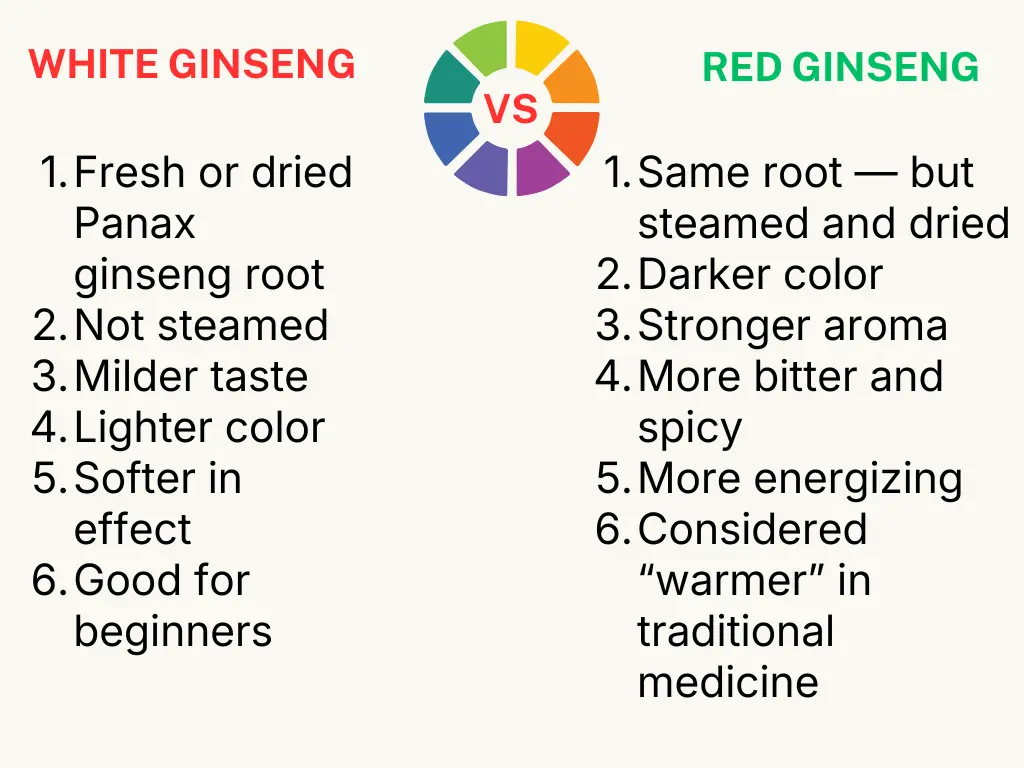
- White ginseng tea tastes lighter, slightly sweet, and less bitter.
- The steaming process concentrates the ginsenosides, making red ginseng taste stronger and work stronger.
If you like bold teas → choose red ginseng; otherwise, choose white ginseng. Which one will you choose?
Tea Bags vs Loose Root vs Powder vs Instant Ginseng Granules
When preparing ginseng tea, the form you choose makes a big difference. I’ve tried them all, here’s my honest breakdown:
1. Ginseng Tea Bags ( Best for convenience).
- Mild flavor
- Easy to brew
- Great for beginners
- Not as strong as real root pieces
If you want to “try ginseng” without committing, start with tea bags.
2. Loose Ginseng Root (Fresh or Dried Slices)
Best for authentic flavor and maximum benefits.
This is how traditional ginseng tea is made.
You simmer the root in hot water, and the flavor is deep, earthy, and full-bodied.
- Strongest taste
- Highest potency
- Can be reused 2–3 times
- Takes more time to prepare
If you truly want the real ginseng experience, this is the way.
3. Ginseng Powder
Best for smoothies, lattes, or quick tea.
- Strong flavor
- Mixes easily
- Perfect for adding to recipes
- Can taste slightly gritty if not mixed well
I personally enjoy it in warm milk with honey, amazing before work.
4. Instant Ginseng Granules
Best for quick energy.
These dissolve instantly, usually sweetened:
- Sweet, pleasant taste
- Mild herbal bitterness
- Very convenient
- Great for people who want a fast boost
It’s the “instant coffee version” of ginseng tea, easy and reliable.
Ch = 03
How Ginseng Tea Works (Science Explained Simply)
Most people drink ginseng tea because it makes them feel energized, focused, or simply better. But the real magic lies in what happens inside your body after every sip.
The Powerhouse Compounds: Ginsenosides
Ginseng tea contains unique natural chemicals called ginsenosides (also known as “saponins”). These compounds are the reason ginseng is considered one of the most valuable medicinal herbs in Asian medicine.
Think of ginsenosides as little messengers that travel through your body and help regulate energy, stress response, immunity, brain function, and inflammation. Different types of ginseng (Korean, American, Siberian) have different ginsenoside profiles, which is why they feel different when you drink them.
How Ginsenosides Affect Your Energy Levels
The biggest reason people drink ginseng tea is the clean, natural energy boost it gives.
This isn’t caffeine — it’s better balanced.
Here’s what ginsenosides do:
Improve how your cells produce energy (ATP)
They help your mitochondria — your cells’ power generators — work more efficiently.
Reduce fatigue signals
They lower chemicals that trigger exhaustion, so you feel more awake.
Stabilize blood sugar
- Stable blood sugar prevents energy crashes and gives a steady, calm alertness.
- If caffeine feels “spiky,” ginseng feels smooth, warm, and sustained.
- How Ginsenosides Support Focus & Brain Function
- This is one of my favorite effects because you actually feel it.
Ginsenosides:
- Increase blood flow to the brain
This improves concentration, clarity, and mental sharpness.
- Boost acetylcholine
A neurotransmitter responsible for memory, learning, and focus.
- Reduce brain fatigue
Many people describe it as “mental freshness,” especially during long work hours.
That’s why ginseng tea is often used by students, professionals, and anyone needing a productivity boost.
How It Reduces Stress & Supports Mood
Ginseng is classified as an adaptogen — meaning it helps your body adapt to stress.
- Balances cortisol (your stress hormone)
- Too much cortisol = stress, anxiety, brain fog, and poor sleep.
- Ginsenosides help bring it back to normal.
- Supports the adrenal glands
- These glands control your stress response and energy levels.
- Improves mood-regulating chemicals
- Ginseng helps regulate dopamine and serotonin — both linked to happiness and positivity.
- It doesn’t sedate you like chamomile — instead, it makes your stress feel easier to handle.
How Ginseng Tea Supports Immunity
If you’ve ever noticed, you fall sick less often when drinking ginseng.
- Activates immune cells (NK cells, macrophages, T-cells)
- These are the soldiers of your immune system.
- Helps your body detect viruses faster
- Ginsenosides improve your immune “reaction time.”
- Reduces inflammation
- Low inflammation = stronger defense system.
- This is why ginseng is traditionally used during flu season or after long periods of stress.
How Ginseng Reduces Inflammation
Most chronic health problems involve inflammation — fatigue, joint pain, slow metabolism, and even skin issues.
Ginsenosides:
- Block inflammatory pathways (like NF-κB)
This reduces swelling, pain, and oxidative stress.
- Increase antioxidants
This slows aging, protects cells, and boosts recovery.
You often feel this as better digestion, less bloating, smoother energy, and improved overall wellness.
The Mechanism of Action in the Body (Summarized Simply)
Ginsenosides are absorbed through your gut. They enter your bloodstream. They interact with your cells, hormones, and nervous system.
They regulate:
- energy production
- stress hormones
- immune response
- inflammation
- brain neurotransmitters
- Your body becomes more balanced, energized, and resilient
In short:
Ginseng tea helps the body reach a natural state of balance where energy rises, stress drops, and mental clarity improves. This is why many people feel both calm and energized at the same time — something very few teas can achieve.
How much caffeine is in a cup of ginseng tea?
Ginseng tea is naturally caffeine-free, making it a good option for people who are sensitive to stimulants. However, some blended teas (such as ginseng green tea or ginseng oolong) may contain caffeine from the base tea rather than from the ginseng itself. Always check the label to confirm whether it’s pure ginseng or a mixture.
What is ginseng called in Pakistan?
In Pakistan, ginseng is commonly known as “Ginseng” in English and “Sinseng” or “Jad-e-Sehhat” in herbal shops (pansaar). It is usually sold in capsule form, dried roots, or powder in big cities and herbal stores. Korean Red Ginseng is also popular under branded names.
Is ginseng cooling or heating?
In Traditional Chinese Medicine (TCM), Korean Red Ginseng is considered warming, while American Ginseng is cooling. Warming ginseng boosts energy and circulation, while cooling ginseng calms the body and supports hydration. Which type you choose depends on your body type and health condition.
Why is ginseng so expensive?
Ginseng is costly because it takes 4–6 years to mature, requires controlled growing conditions, and has high global demand. Premium grades like Korean Red Ginseng undergo steaming, drying, and aging, which increase production costs. Wild ginseng is extremely rare, making it even more expensive.
Who is the largest producer of ginseng in the world?
China is the world’s largest producer of ginseng, followed by South Korea and the United States. Korea is especially known for its high-quality red ginseng, while China dominates global supply due to large cultivation areas and industrial processing.
What is the medical use of ginseng?
Ginseng has traditionally been used to boost energy, enhance mental clarity, support immune function, and reduce fatigue. Research suggests it may help regulate blood sugar, ease inflammation, and improve stress response. While promising, ginseng should be used responsibly, especially for people with medical conditions.
Ch = 04
Health Benefits of Ginseng Tea
(science-backed + simple explanations)
Ginseng tea has been used for centuries, and modern research finally explains why people swear by it. Its magic comes mainly from ginsenosides—special plant compounds that influence energy, immunity, brain function, and inflammation. Below are the benefits broken down in a practical, human-friendly way
May Improve Energy Levels (Without the Jitters)
One of the biggest reasons people drink ginseng tea is for clean, stable energy.
Unlike coffee, which spikes your adrenal system, ginseng helps the body produce energy more efficiently.
How it works:
Ginsenosides help your cells use oxygen better, which can reduce fatigue and give you an “awake but calm” feeling.
Human experience:
When I drink ginseng tea early in the morning, I don’t feel a caffeine buzz—just a gentle lift. I stay focused without the afternoon crash.
May Improve Brain Function & Mental Clarity
Ginseng is known as a natural nootropic. Studies show it may help with:
- focus
- memory
- reaction time
- mental clarity
How it works:
Ginsenosides improve blood circulation to the brain and reduce oxidative stress, helping your mind stay clear and sharp.
In real life:
If you’ve ever felt mentally foggy, a cup of warm ginseng tea feels like your brain just opened a window and let fresh air in.
May Help Strengthen Immunity
Ginseng tea is popular during seasonal changes or when someone feels run-down.
Why:
It stimulates immune cells like:
- NK (natural killer) cells
- macrophages
- T-cells
These are the soldiers of your immune system.
What it feels like:
People who take ginseng regularly often report fewer colds and faster recovery.
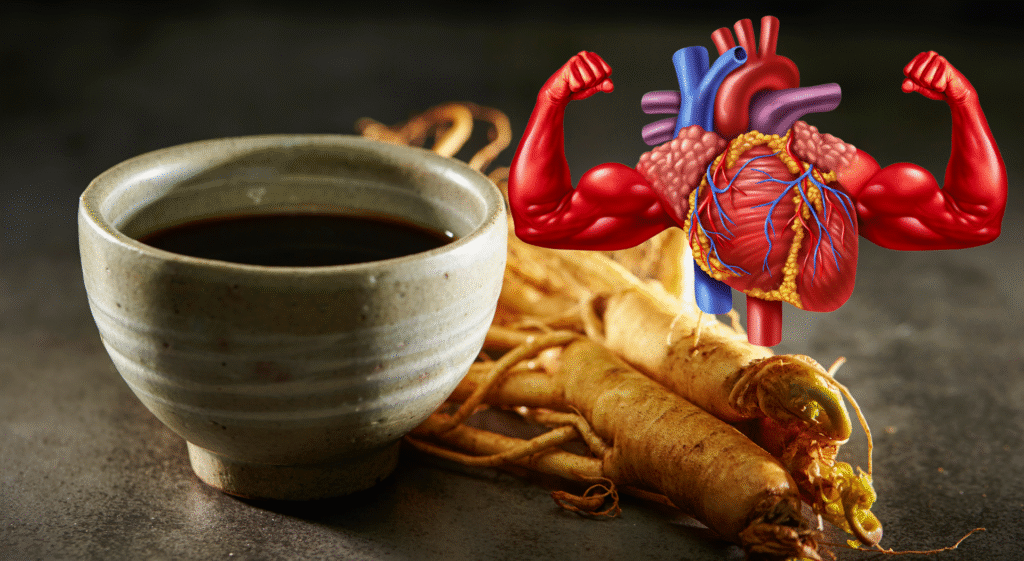
May Improve Heart Health
Ginseng may help keep your heart healthy by:
- improving blood flow
- reducing oxidative stress
- supporting healthy cholesterol levels
Some studies also suggest it may help regulate blood pressure.
Human-friendly explanation:
Think of ginseng as a gentle tune-up for your cardiovascular system—nothing intense, just supportive.
May Help Reduce Stress & Anxiety
Ginseng is an adaptogen, meaning it helps the body maintain balance when stressed.
How it works:
It regulates cortisol (your stress hormone) and supports your nervous system.
Real experience:
After a stressful day, warm ginseng tea feels grounding. It doesn’t make you sleepy but calms the “wired but tired” feeling.
May Support Blood Sugar Control
Some research shows ginseng may help:
- improve insulin sensitivity
- lower post-meal blood glucose
- reduce sugar absorption
Who does this help:
People with blood sugar fluctuations or anyone looking to manage cravings.
May Have Anti-Inflammatory & Antioxidant Effects
Inflammation is linked to fatigue, aging, and chronic health issues.
Ginsenosides have strong antioxidant properties that help:
- reduce cellular damage
- fight inflammation
- support long-term vitality
Simple explanation:
If inflammation is a small fire inside the body, ginseng is like a natural anti-fire agent.
May Help Reduce Menstrual Discomfort
Some women find ginseng tea soothing during their cycle because it may help:
- ease cramps
- reduce fatigue
- balance mood
- support overall hormonal wellness
Warm ginseng tea with honey is especially comforting during PMS.
May Support Sexual Health & Stamina
Both Korean and American ginseng are known traditionally for supporting:
- libido
- stamina
- performance
- overall vitality
Research suggests ginseng may increase nitric oxide production, which supports blood flow, important for both men and women.
It’s Easy to Add to Your Diet
This is honestly one of the best things about ginseng tea.
You can drink it:
- in the morning for steady energy
- at work for focus
- in the evening to relax
- During the cold season, for immunity
It blends well with lemon, honey, ginger, and even green tea. It’s a small daily habit with surprisingly big benefits.
What happens when you drink ginseng tea every day?
Drinking ginseng tea daily can help improve energy levels, mental clarity, and stress resilience over time. Regular consumption may support immune function, heart health, and blood sugar balance. However, effects are gradual and depend on the type of ginseng and dosage. It’s important to monitor your body’s response and avoid overconsumption to prevent mild side effects like headaches or insomnia.
How quickly does ginseng start working?
The effects of ginseng vary depending on the type and form. Some people notice a gentle energy boost and improved focus within a few hours of drinking tea, while others experience benefits such as reduced fatigue and enhanced immunity after 2–4 weeks of regular consumption. Consistency is key, and high-quality ginseng provides more reliable results.
What are the benefits of drinking ginseng tea?
Ginseng tea is valued for its energy-boosting, stress-relieving, and immunity-supporting properties. Scientific studies suggest it may also help improve brain function, support heart health, regulate blood sugar, and reduce inflammation. It’s a versatile herbal tea that can be integrated into your daily routine for both physical and mental wellness.
Ch = 05
Uses of Ginseng Tea
Ginseng tea isn’t just another herbal drink—it’s one of those teas you start drinking for one reason and then slowly realize it helps you in many parts of your day. Below are the most common real-world uses, based on traditional knowledge, modern wellness practices, and personal experience.
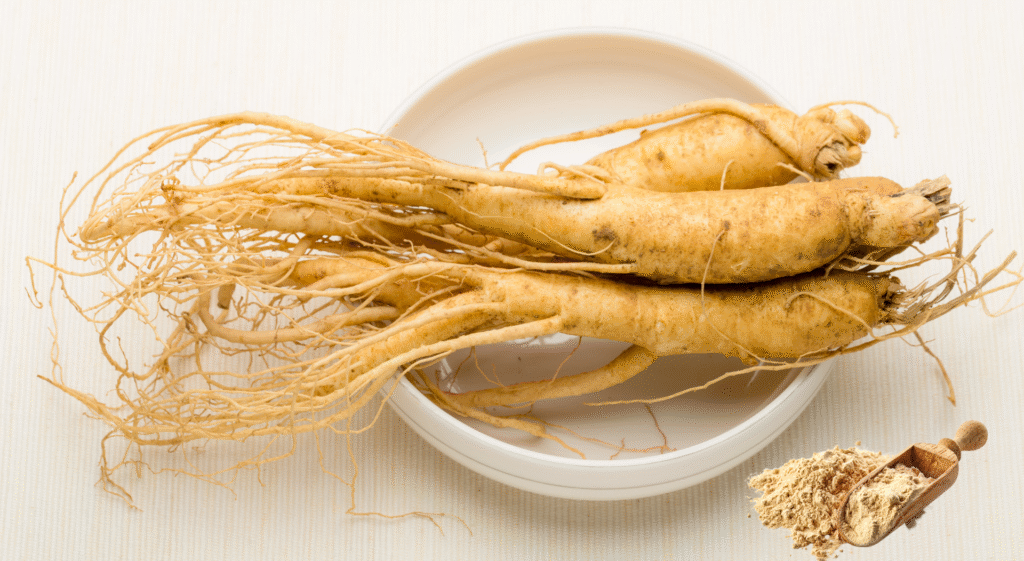
1. Daily Energy
Ginseng tea is widely used as a natural energy booster, especially for people who don’t want the crash that comes with coffee.
Why it works:
Ginsenosides help your body use energy more efficiently, giving you a clean lift without overstimulation.
How people use it:
Morning replacement for coffee
- pre-work tea for a fresh start
- long-day support to avoid burnout
Human experience:
If I drink ginseng tea early in the day, I feel awake but calm—no jitters, no fast heartbeat, just steady energy.
2. Focus & Productivity
Whether you’re studying, working on a laptop, or doing creative work, ginseng tea is a popular “focus drink.”
Why people love it:
It helps sharpen mental clarity, reduce brain fog, and improve concentration.
Who uses it:
- students
- office workers
- entrepreneurs
- Anyone needing a mental boost
Real feeling:
It doesn’t make you hyper-focused like caffeine. Instead, it provides a smooth, sustained mental alertness.
3. Stress Relief
Ginseng is an adaptogen, which means it helps your body better handle stress.
How it helps:
- balances cortisol levels
- reduces that “wired but tired” feeling
- supports the nervous system
When it’s used:
- after a heavy workday
- during emotional stress
- When your mind feels overwhelmed
What it feels like:
A warm cup of ginseng tea feels grounding—your mind slows down, your body relaxes, and your stress response becomes calmer.
4. Immune Support
This is one of the most traditional uses of ginseng tea. People drink it during flu season or when they feel run-down.
Why:
Ginseng boosts immune cells, such as NK cells and macrophages, helping your body defend itself.
Real-world usage:
- during seasonal changes
- when recovering from a cold
- when feeling low immunity or tired
It’s not a quick fix, but consistent use strengthens the body over time.
5. Digestive Balance
Although ginseng is not a digestive tea like peppermint or ginger, many people find it surprisingly soothing for the stomach.
How it helps digestion:
- reduces inflammation in the gut
- may help with mild bloating
- supports overall gut function through stress reduction
When it works best:
After a heavy meal or when your stomach feels sluggish.
Human note:
I’ve noticed that drinking it warm after lunch helps reduce the post-meal crash and keeps digestion comfortable.
6. Traditional Medicine Uses
Ginseng has a long history in Traditional Chinese Medicine (TCM), Korean herbal medicine, and Native American medicine. Its uses go far beyond daily energy.
Traditional uses include:
- restoring vitality in weak or fatigued people
- balancing “Qi” (life energy)
- supporting longevity
- enhancing sexual vitality
- strengthening the lungs
- improving resilience during illness recovery
- increasing warmth and circulation in the body
Cultural note:
In Korea and China, ginseng is often given as a precious gift to older adults, symbolizing health, strength, and long life.
Ch = 06
Ginseng Tea for Weight Loss
Ginseng tea isn’t a magic fat burner, but it can be a helpful companion for anyone looking to maintain a healthy weight. Its natural compounds gently support metabolism, appetite control, and overall energy, which, together, can assist with weight management.

Does It Burn Fat?
Ginsenosides in ginseng can slightly increase energy expenditure, potentially helping burn calories more efficiently. While it’s not a replacement for diet and exercise, regular ginseng tea may support your body’s natural fat-burning processes.
Human experience:
Drinking ginseng tea before workouts gives a light energy boost, making it easier to stay active and burn calories.
Appetite Suppression
Ginseng may help reduce cravings and control appetite by regulating blood sugar levels. People often report feeling less hungry between meals when they regularly sip ginseng tea.
Practical tip:
Enjoy a warm cup mid-morning or mid-afternoon to curb snacking without feeling deprived.
Boosting Metabolism
Ginseng helps stimulate your metabolism at the cellular level. It can improve how your body processes energy, contributing to gradual, sustainable weight management.
Human note:
I personally notice a subtle difference in energy and alertness, which makes me move more and stay active throughout the day.
Water Retention Reduction
Some studies suggest ginseng has mild diuretic properties, which may help reduce water retention. While this isn’t fat loss, it can make you feel lighter and less bloated.
Tip:
Combine ginseng tea with plenty of water and a balanced diet for optimal results.
Ch = 07
Ginseng Tea for Energy
Many people drink ginseng tea for focus and alertness, and here’s why it stands out compared to coffee or other stimulants.
Why It’s Better Than Coffee
Unlike coffee, ginseng tea doesn’t spike cortisol levels or overstimulate the nervous system. It provides a natural, balanced boost that feels smooth and sustained.
Human experience:
When I replace my morning coffee with ginseng tea, I stay alert without jitters, heart palpitations, or a crash later.
Smooth Energy Release
Ginseng helps your cells use energy more efficiently, resulting in a gradual, long-lasting lift. You feel warm, awake, and mentally clear.
Best part:
The energy is stable—no rollercoaster highs and lows like caffeine can cause.
No Caffeine Crash
Many people love ginseng tea because it avoids the dreaded afternoon crash. You get alertness in a calm, grounded way, making it perfect for long workdays or study sessions.
Best Time to Drink It
For maximum benefits:
- Morning: For gentle wakefulness and focus
- Mid-morning or early afternoon: To maintain energy
- Avoid drinking late evening if you are sensitive to stimulants (though it’s much milder than coffee)
Human tip:
I usually sip a cup around 10 a.m. and another after lunch. I stay alert, focused, and calm without reaching for coffee.
Ch = 08
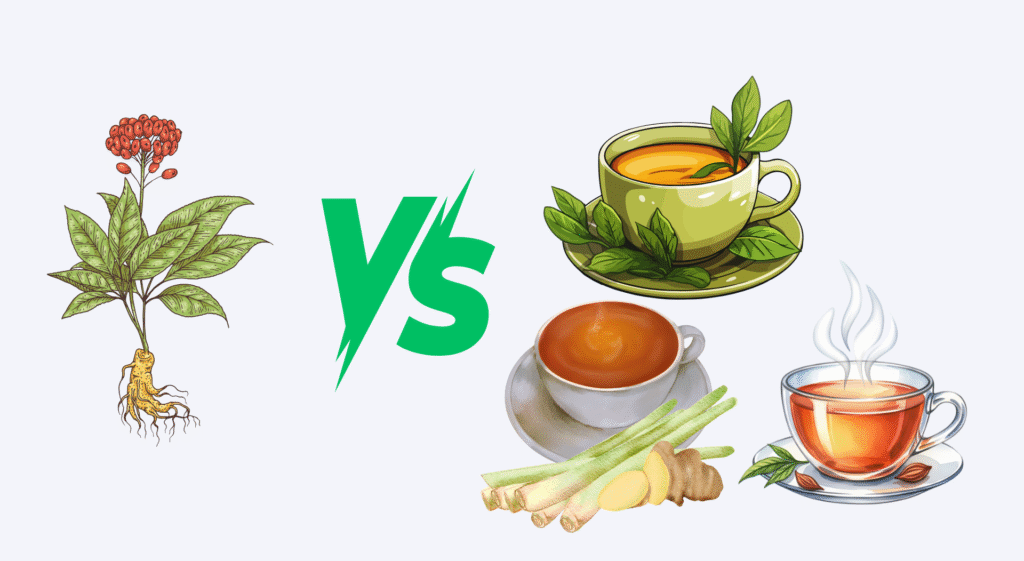
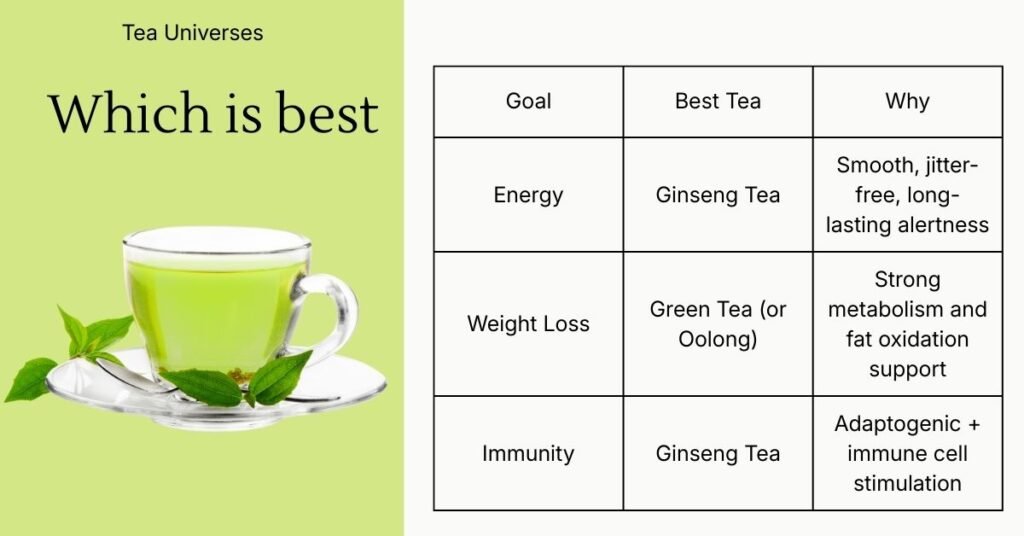
Ginseng Tea vs Other Teas
Ginseng tea is unique among teas because it isn’t made from traditional tea leaves. Its effects and taste profile stand out from those of green, ginger, or oolong tea. Here’s a detailed comparison based on flavor, benefits, and practical use.
Ginseng Tea vs Green Tea
Flavor:
- Ginseng tea: earthy, slightly sweet, subtle bitterness
- Green tea: grassy, fresh, somewhat astringent
Benefits:
- Energy: Ginseng provides smooth, sustained energy without caffeine spikes. Green tea has moderate caffeine, which can give quick alertness but may cause jitters in sensitive people.
- Weight Loss: Both support metabolism, but green tea is better studied for fat oxidation due to catechins, while ginseng provides a gentle boost by improving energy and reducing fatigue.
- Immunity: Ginseng directly stimulates immune cells. Green tea also supports immunity via antioxidants, but ginseng’s adaptogenic effect gives additional stress resilience.
Verdict:
- Want long-lasting calm energy → Ginseng tea.
- Want antioxidant-rich, lighter tea with moderate caffeine → Green tea.
Ginseng Tea vs Ginger Tea
Flavor:
- Ginseng tea: earthy, slightly sweet, warming
- Ginger tea: sharp, spicy, pungent
Benefits:
- Energy: Ginseng gently boosts energy; ginger energizes through its warming effect, but is less sustained.
- Weight Loss: Ginger may help digestion and reduce bloating; ginseng supports metabolism and mild fat-burning.
- Immunity: Both are immune-supportive. Ginger is excellent for gut health and cold relief, while ginseng stimulates overall immune function.
Verdict:
- Want calm energy + adaptogenic benefits → Ginseng tea
- Want digestive support + warming spice → Ginger tea.
Ginseng Tea vs Oolong Tea
Flavor:
- Ginseng tea: earthy and sweet
- Oolong tea: floral, slightly roasted, mildly sweet
Benefits:
- Energy: Ginseng provides calm focus; oolong has moderate caffeine, providing alertness but can temporarily spike energy.
- Weight Loss: Both may support metabolism. Oolong can improve fat oxidation, but ginseng helps sustain energy for activity.
- Immunity: Ginseng has stronger adaptogenic and immune benefits, while oolong provides antioxidants.
Verdict:
- Want gentle, long-lasting energy and immunity? → Ginseng tea.
- Want flavorful tea with metabolism benefits → Oolong tea
Ch = 09
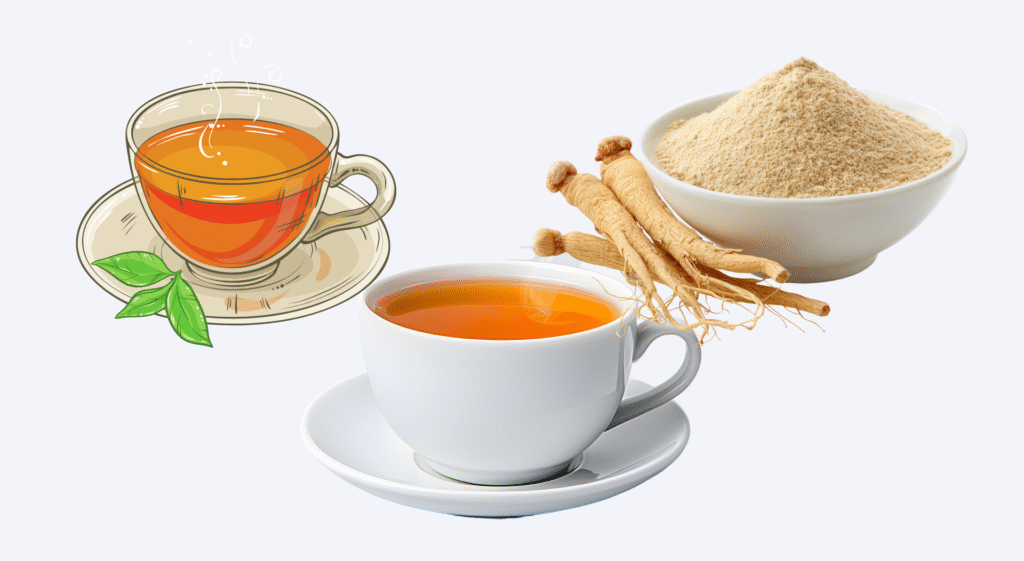
Ginseng Tea Dosage
Ginseng tea is generally safe when consumed in moderation, but like any herbal supplement, the correct dosage is key to maximizing benefits and avoiding side effects.
Recommended Daily Dosage
Most studies and traditional use suggest:
- Adults: 1–3 grams of dried root per day (or equivalent in powder/tea bags)
- Beginners: Start with a smaller dose (½–1 gram) to see how your body reacts
Human tip:
I usually start with 1 cup of mild ginseng tea per day and gradually increase to 2 cups if I need extra energy or focus.
Standard Servings
Tea bag | 1 bag per cup (steep 5–10 min) |
Powder | 1 teaspoon (≈1–2 grams) in hot water or smoothies |
Root slices | 2–3 thin slices per cup, simmered for 10–20 minutes |
Human note:
Loose root slices give the strongest flavor and maximum benefits, while tea bags are convenient for quick daily use.
How Much Is Too Much?
Overconsumption can lead to unwanted effects:
- More than 9 grams per day of ginseng root (or equivalent) may cause mild side effects.
- Extended high doses should be avoided unless supervised by a healthcare professional.
Rule of thumb:
“Start small, observe your body, and adjust.” Less is often more with ginseng.
Ch = 10
Side Effects of Ginseng Tea
Ginseng tea is generally safe, but some people may experience mild side effects, especially if taken in excess or combined with certain medications.

Common Mild Side Effects
- Mild headache
- Insomnia if taken too late in the day
- Digestive upset (nausea, mild diarrhea)
- Slight jitteriness in sensitive individuals
These are usually temporary and resolve by reducing the dosage or switching to a milder type of ginseng (such as American or white ginseng).
High-Dose Concerns
Consuming very high doses over long periods can cause:
- High blood pressure
- Rapid heartbeat
- Hormonal changes (rare)
- Interference with blood sugar control
Human note:
I personally stick to moderate daily use and notice excellent benefits without any of these issues.
Who Should Avoid It
- Pregnant or breastfeeding women – ginseng may affect hormone balance.
- People with heart problems or high blood pressure – especially if taking medications.
- Individuals on blood thinners (e.g., warfarin) – ginseng may affect clotting.
- Anyone sensitive to stimulants – start with small doses to test tolerance.
Practical advice:
Always check with a healthcare provider if you have medical conditions or take prescription drugs before adding ginseng tea to your routine.
Ch = 11
Who Should & Shouldn’t Drink Ginseng Tea
Ginseng tea offers benefits for many, but it’s key to recognize who should use it and who should be cautious.

Good For:
- Low energy: Provides a gentle, sustained energy boost without jitters.
- High stress: As an adaptogen, it helps the body cope with stress.
- Immune support seekers: Stimulates immune cells for better resistance.
- Office workers/students: Enhances focus and mental clarity during long hours.
Human experience:
I’ve noticed that a cup mid-morning keeps me alert and calm during back-to-back meetings—much better than coffee for sustained energy.
Avoid If:
- Pregnant or breastfeeding: Hormonal effects may not be safe.
- On blood thinners: Ginseng can affect clotting.
- Sensitive to caffeine-like herbs: May feel jittery or restless.
- Autoimmune conditions: Should consult a doctor before use, as ginseng can stimulate immune activity.
Practical tip:
Even if you fall in the “good for” category, start small and observe how your body responds.
Ch = 12
Ginseng Tea Safety Warnings
While generally safe, it’s essential to follow guidelines for optimal and safe use.
Drug Interactions
- Can interact with blood thinners, diabetes medications, and blood pressure drugs.
- Always consult a healthcare provider if you’re on prescription medication.
Safe Timing
- Best taken in the morning or early afternoon for energy.
- Avoid drinking late at night to prevent mild insomnia.
Allergies
- Rarely, but some people may experience skin rashes, headaches, or stomach upset.
- Start with a small amount to test tolerance.
Long-Term Use Guidelines
- Safe for daily use in moderate amounts (1–3 grams of root or equivalent).
- Take breaks after 8–12 weeks of continuous use to avoid tolerance or overstimulation.
Human note:
I personally take ginseng tea daily, but rotate with other herbal teas to keep the body balanced.
Ch = 13
Can You Make Ginseng Tea Yourself?
Absolutely! One of the joys of ginseng tea is how easy it is to prepare at home, whether you use fresh root, dried slices, or powdered form.

DIY Homemade Ginseng Tea
Using Fresh Root
- Slice 2–3 thin pieces of fresh ginseng root.
- Boil 2 cups of water, then add the slices.
- Simmer gently for 10–15 minutes.
- Strain, pour, and enjoy warm.
Using Dried Root
- Take 2–3 slices of dried ginseng root.
- Steep in hot water (80–90°C) for 10–20 minutes.
- Optional: Add honey or lemon for flavor.
Using Powder
- Mix one teaspoon of ginseng powder in a cup of hot water.
- Stir well until fully dissolved.
- It can be added to smoothies or milk for a flavored drink.
Steeping Tips
- Longer steeping = stronger flavor and more ginsenosides released.
- Reusing root slices: You can steep slices 2–3 times. The flavor will be milder each time.
- Flavor pairing: Honey, lemon, ginger, or cinnamon complements ginseng beautifully.
Human note:
I love simmering fresh slices for 15 minutes in the morning—then adding a squeeze of lemon. It’s warming, energizing, and feels like a small ritual that sets the tone for the day.
Ch = 14
Brewing Methods (Beginner Friendly)
Ginseng tea can be brewed in many ways, depending on what form you have, fresh root, dried slices, powder, tea bags, or instant granules. Here’s how to get the most flavor and benefits from each method.
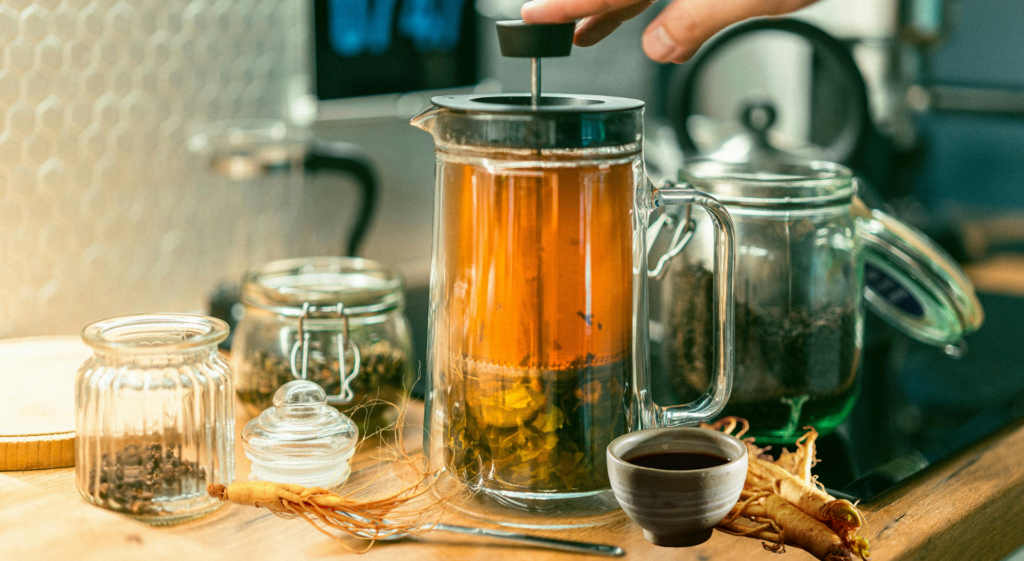
Using Fresh Ginseng Root
Steps:
- Slice 2–3 thin pieces of fresh ginseng root.
- Bring 2 cups of water to a gentle boil (around 90–95°C / 194–203°F).
- Add the fresh slices and simmer for 10–15 minutes.
- Strain the tea into a cup.
Tips:
- Fresh root produces the strongest flavor and aroma.
- You can reuse the slices 2–3 times, simmering slightly longer each time.
- Add honey or lemon if desired.
Using Dried Ginseng Slices
Steps:
- Take 2–3 dried ginseng root slices.
- Heat water to about 85–90°C (185–194°F).
- Steep the slices for 10–20 minutes, depending on desired strength.
- Pour and enjoy.
Tips:
- Dried slices have a milder, sweeter flavor compared to fresh root.
- It can be stored for months in a cool, dry place.
Using Tea Bags
Steps:
- Place one tea bag in a cup.
- Pour hot water around 85–90°C (185–194°F).
- Steep for 5–10 minutes.
- Remove the bag and enjoy.
Tips:
- Tea bags are convenient for quick brewing but may be slightly less potent than fresh or loose tea.
- Add a pinch of cinnamon, ginger, or honey for extra warmth and flavor.
Using Instant Ginseng Granules
Steps:
- Take one teaspoon of instant ginseng granules.
- Pour hot water (80–85°C / 176–185°F) over the granules.
- Stir until fully dissolved.
- Drink immediately.
Tips:
- Instant granules are convenient for travel or office use.
- Flavor may be milder, so adjust the amount of granules if desired.
Using Ginseng Powder
Steps:
- Take one teaspoon of ginseng powder.
- Add it to a cup of hot water (80–85°C / 176–185°F).
- Stir well until fully mixed.
- Optionally, add honey, lemon, or milk.
Tips:
- Powdered ginseng is very versatile—it can also be added to smoothies, oatmeal, or soups.
- Avoid boiling powder directly; hot water preserves the ginsenosides better.
Brewing Tips for Beginners:
- Water temperature matters: Too hot can make tea bitter; too cold reduces extraction.
- Steeping time: Longer steeping = stronger tea, but can increase bitterness.
- Flavor additions, such as Honey, lemon, cinnamon, or ginger, complement ginseng well.
- Storage: Fresh or dried roots should be kept in a cool, dry place to maintain flavor and potency.
Ch = 15
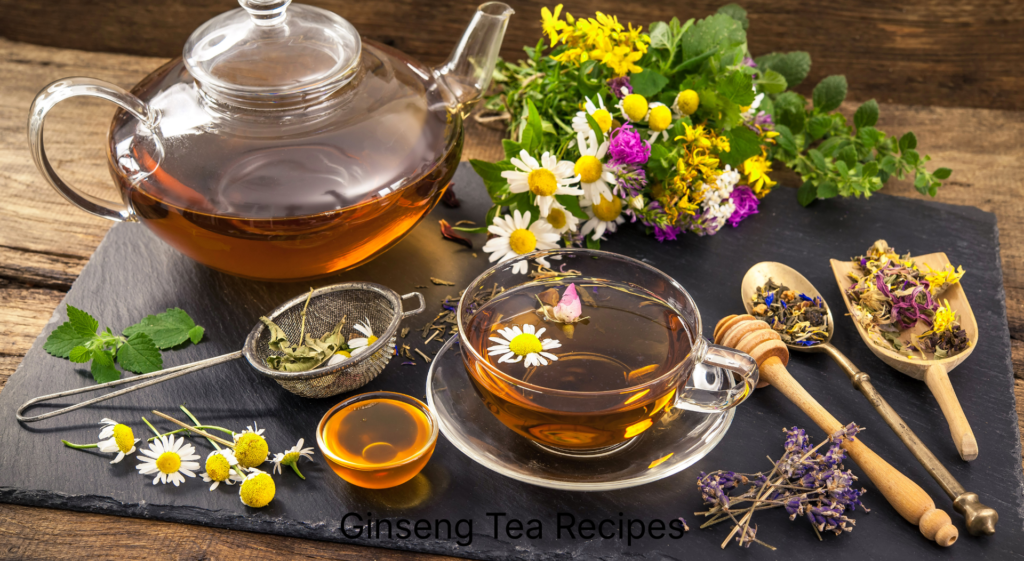
Ginseng Tea Recipes
Ginseng tea is versatile, you can enjoy it plain or add flavors like honey, lemon, and ginger. Here are some beginner-friendly recipes that maximize both taste and benefits.
Classic Ginseng Tea
Ingredients:
- 2–3 slices of fresh or dried ginseng root
- 2 cups of hot water
Instructions:
- Bring water to 90°C (194°F).
- Add ginseng slices and simmer for 10–15 minutes.
- Strain into a cup and enjoy warm.
Tips:
- For a stronger brew, steep longer or reuse the slices 1–2 more times.
- Perfect for morning energy or mid-afternoon calm alertness.
Ginseng Honey Tea
Ingredients:
- 2–3 slices of ginseng root (fresh or dried)
- 2 cups hot water
- 1 teaspoon honey
Instructions:
- Boil water to 90°C (194°F), then add the ginseng slices.
- Simmer for 10–15 minutes.
- Remove from heat, let cool slightly, and stir in honey.
Tips:
- Honey adds natural sweetness and enhances immune support.
- Avoid adding honey to boiling water to preserve its nutrients.
Ginseng Lemon Tea
Ingredients:
- 2 ginseng slices or one teaspoon powder
- 2 cups hot water
- Juice of ½ lemon
Instructions:
- Steep ginseng in hot water (85–90°C / 185–194°F) for 10–15 minutes.
- Add lemon juice after steeping.
- Stir and enjoy warm or slightly cooled.
Benefits:
- Lemon boosts vitamin C content and adds a refreshing tang.
- Great for morning detox or post-workout refreshment.
Ginseng Ginger Tea
Ingredients:
- 2 ginseng slices
- 2–3 slices fresh ginger
- 2 cups hot water
Instructions:
- Bring water to a gentle boil, then add ginseng and ginger slices.
- Simmer for 10–15 minutes.
- Strain and enjoy.
Tips:
- Ginger adds warmth and aids digestion.
- Optional: Add honey for a sweeter taste.
Ginseng Iced Tea
Ingredients:
- 2–3 slices of ginseng root or one teaspoon of powder
- 2 cups hot water
- Ice cubes
- Lemon slices or mint leaves (optional)
Instructions:
- Steep ginseng in hot water (90°C / 194°F) for 10–15 minutes.
- Let the tea cool to room temperature.
- Pour over ice and garnish with lemon or mint.
Tips:
- Perfect for hot weather or as a refreshing afternoon drink.
- Can add honey or a natural sweetener to taste.
Human note:
I personally rotate between classic morning ginseng tea for calm energy and ginseng ginger tea after lunch to stay focused and energized. The iced version is my favorite during summer, it’s revitalizing without caffeine jitters.
Ch = 16
Serving Tips
Ginseng tea is versatile, and knowing when and how to drink it can make a big difference in its taste and benefits.

Best Time to Drink
- Morning: For a gentle, sustained energy boost without caffeine jitters.
- Late morning / early afternoon: Helps maintain focus and calm alertness throughout the day.
- Avoid late evening: It can slightly interfere with sleep in sensitive individuals.
Human note:
I usually sip a cup around 9–10 a.m. for alertness and another around 1 p.m. if I need an afternoon lift.
How to Enhance Flavor
- Add honey, lemon, or ginger for sweetness and added health benefits.
- Cinnamon or mint can provide warming or refreshing notes.
- For a richer taste, simmer loose root slices longer rather than steeping quickly.
What to Avoid Mixing With
- Strong medications without consulting a doctor.
- Excessive caffeine—while small amounts are okay, combining with strong coffee may overstimulate the nervous system.
- Highly acidic drinks immediately after drinking ginseng may slightly reduce the absorption of certain nutrients.
Ch = 17
Storage Tips
Keep ginseng tea fresh, flavorful, and potent by storing it properly.
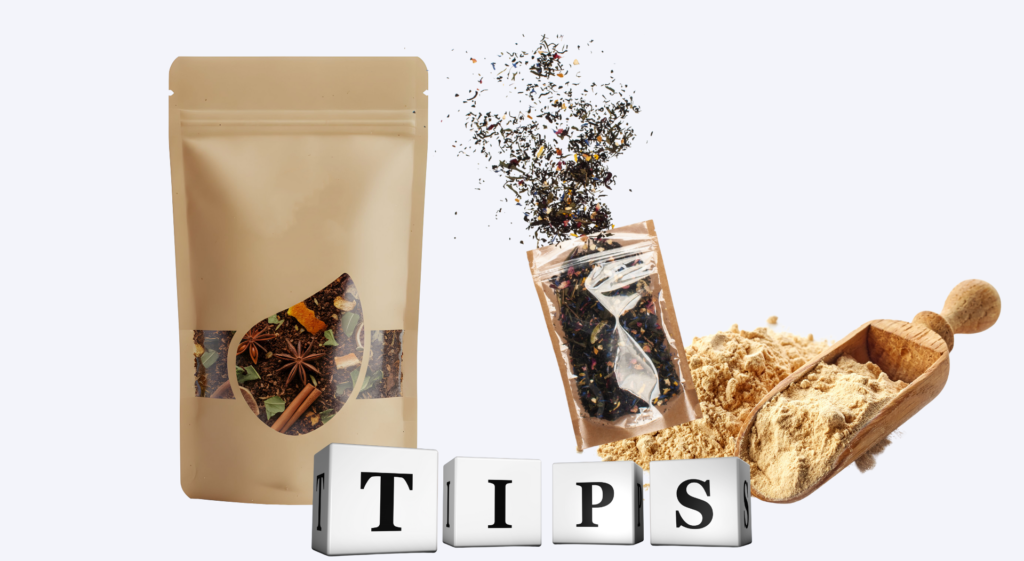
How to Store Ginseng Root
- Fresh root: Wrap in a damp paper towel and refrigerate for up to 1 month.
- Dried root: Keep in an airtight container, away from light, heat, and moisture. Can last 1–2 years.
Storing Tea Bags
- Store in a cool, dry place.
- Avoid storing near the stove or sunlight to preserve aroma and ginsenosides.
- Shelf life is typically 12–18 months.
Storing Powders
- Keep in a sealed, opaque container to avoid moisture and light.
- Avoid refrigeration if condensation is possible; a pantry or cupboard is ideal.
- Typically lasts 6–12 months if stored properly.
Shelf Life
Fresh root | 2–4 weeks in fridge |
Dried root | 1–2 years |
Tea bags | 12–18 months |
Powder | 6–12 months |
Instant granules | 12–18 months |
Human tip:
I always label my containers with purchase or preparation dates—it keeps my ginseng tea fresh and flavorful for months.
Do you need to refrigerate ginseng?
You don’t always need to refrigerate dried ginseng, as it stays stable in a cool, dark, airtight container for months. However, fresh ginseng root must be refrigerated because it contains moisture and can spoil quickly. Keep it in a breathable paper bag or wrapped in a towel to prevent mold. Refrigerating powdered ginseng is optional but helps maintain potency. Always avoid heat, sunlight, and humidity to preserve its active compounds.
How long can you keep ginseng tea?
Freshly brewed ginseng tea is best enjoyed immediately, but you can refrigerate it for up to 24 to 48 hours. After that, its flavor weakens, and the beneficial compounds begin to degrade. If stored in an airtight glass container, it stays fresher for longer. Avoid keeping it at room temperature for more than 6–8 hours, as bacteria can grow. Always smell and taste a small sip before drinking stored tea.
Ch = 18
Where Can I Buy Ginseng Tea
Finding high-quality ginseng tea can make a big difference in flavor, potency, and health benefits. Whether you prefer fresh root, dried slices, tea bags, or powdered forms, here’s where to look and what to check.
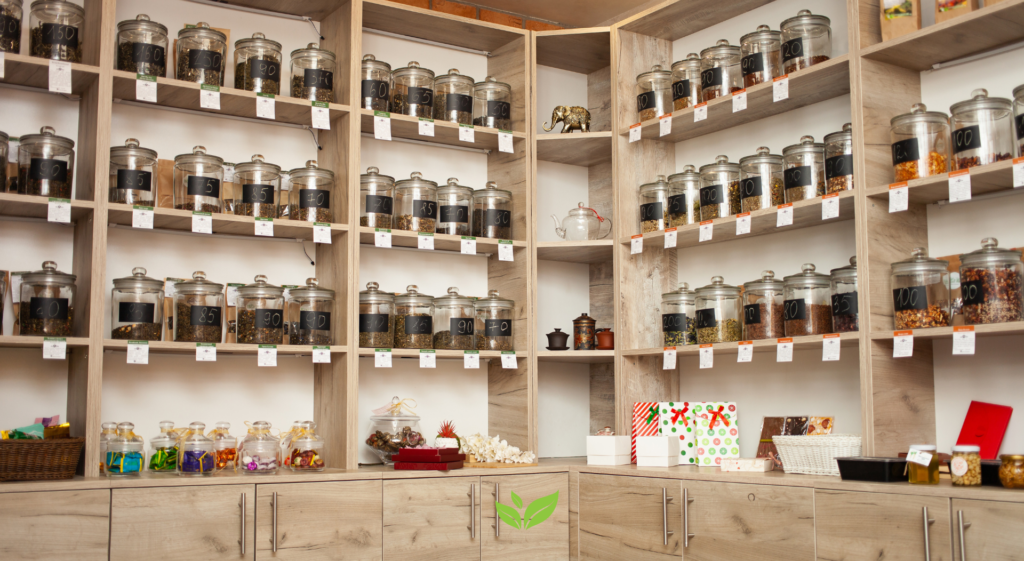
Grocery Stores
- For convenient access, many supermarkets now offer packaged ginseng tea, usually found in the tea or herbal section.
- Commonly available as tea bags or dried root slices.
- Convenient, but quality can vary, so always check the packaging and expiration date.
Human tip:
Look for clear labeling of the ginseng type (Korean, American, Siberian) and, if possible, organic certification.
Asian Markets
- Asian grocery stores are reliable sources for fresh ginseng root and high-quality dried slices, making them ideal for premium options.
- You can also find specialty blends, like Korean red ginseng tea.
- Prices may be higher than supermarkets, but the quality is often superior.
Human tip:
Check the color, texture, and aroma of the root. Fresh ginseng should be firm and fragrant, not shriveled or dry.
Online Stores
- Online stores like Amazon, Walmart, and specialty tea shops provide the widest selection of ginseng teas, including powders, granules, tea bags, and loose root.
- You can read reviews to gauge the potency, flavor, and reliability of the seller.
- Often convenient for bulk purchases or rare varieties like Siberian ginseng.
Human tip:
Look for products that list ginsenoside content or indicate “100% ginseng root/extract.” Avoid products with excessive fillers or artificial flavors.
What to Look for (Quality Signs)
Type of ginseng | Korean, American, Siberian—each has unique benefits |
Appearance of the root | Firm, plump slices or root; not brittle or darkened |
Minimal additives | Pure ginseng without unnecessary fillers |
Packaging | Airtight, opaque packaging protects potency |
Origin | Trusted sources (Korea, China, USA) for authenticity |
Human note:
I personally buy dried Korean ginseng slices from a trusted online specialty store. The aroma, color, and taste are far superior to regular supermarket tea bags.

I’m Tahir Subhani, the writer behind Tea Universes. As a tea researcher and wellness-focused writer, I specialize in exploring the science, history, and real-life benefits of herbal teas like ginseng, ginger, green tea, and more.
Frequently Asked Questions
Ginseng should not be mixed with strong caffeine drinks, blood thinners, antidepressants, stimulant herbs, or alcohol, as this can cause overstimulation or heart strain. Consult your doctor if you take medications.
People on blood thinners, with high blood pressure, autoimmune issues, or who are pregnant or breastfeeding should avoid ginseng unless advised by a doctor. Consult a healthcare provider for chronic conditions.
Avoid ginseng tea late in the day to prevent sleep issues. If ill, under heart stress, or on interacting drugs, skip ginseng. Reduce or pause if side effects occur.
Ginseng usually energizes, but some people, especially with American ginseng, feel calmer or sleepy. Timing depends on your body.
Possible side effects include headaches, digestive issues, insomnia, or a fast heartbeat, especially in high doses or with other stimulants. Start with small amounts.
Ginseng interacts with medications and can affect hormones, blood pressure, and sleep. Product quality varies. Use trusted sources and correct dosage for safety.
Morning or early afternoon is best for energy. Avoid at night unless American ginseng suits your needs.
Yes, honey adds sweetness and balances the flavor of ginseng. Let the tea cool before adding honey for the best results.