
Is Green Tea Acidic or Basic? Learn about green tea’s pH level, how it affects acid reflux, and the best brewing tips to make it gentler on your stomach, expert guide with science-backed answers. Green tea has a reputation for being one of the healthiest beverages on earth, but many tea drinkers still wonder: Is green tea acidic or basic?
Suppose you deal with acid reflux, heartburn, or stomach sensitivity. The pH level of what you drink can influence how your body reacts after every sip. Today, you’ll find practical answers, from how green tea’s acidity compares to coffee to how to make it gentler on your stomach.
Quick Answer, Is Green Tea Acidic or Basic?
Green tea is mildly acidic in its brewed form, but it acts as an alkaline-forming beverage inside your body.
When you brew a regular cup of green tea, its pH ranges from 7 to 10, depending on factors such as tea type, brewing time, and water quality. Since a pH of 7 is neutral, anything above that is slightly alkaline, and anything below is acidic.
- Lightly brewed green tea → closer to neutral to slightly alkaline (pH 8–9)
- Substantial, long-steeped green tea → may drop toward mildly acidic (pH 6–7)
So, compared with coffee (pH 4–5) or black tea (pH 5–6), green tea is far less acidic.
From a health perspective, even though the liquid itself can be slightly acidic, your body metabolizes it in a way that leaves alkaline minerals, helping balance stomach acid and reduce digestive irritation.
In short, Green tea’s acidity is mild and usually not harmful. It’s one of the best options for people who want a soothing, low-acid drink that still provides energy and antioxidants.
Understanding Green Tea’s pH Level
Green tea has a slightly acidic nature, with a pH level ranging from 7 to 10, depending on how it’s brewed, the water quality, and the tea variety. On the pH scale (which measures acidity and alkalinity from 0 to 14), 7 is neutral, below 7 is acidic, and above 7 is basic (alkaline).
In most cases, green tea falls between 7 and 9, meaning it’s either neutral or mildly alkaline — not strongly acidic. This makes it gentler on the stomach than black tea or coffee, which often have pH levels around 4.5–6.
Several factors influence green tea’s acidity:
- Brewing time: Longer steeping can release more tannins, slightly increasing acidity.
- Water type: Hard water (with minerals) tends to make the tea more alkaline.
- Tea variety: Matcha and Sencha usually have slightly higher pH than other green teas.
- Temperature: Hotter water extracts more compounds that may slightly alter pH balance.
Green tea is not acidic enough to harm your stomach or teeth. It’s one of the most balanced and body-friendly teas, which is why it’s often recommended for people with acid reflux or sensitive digestion.
Is Green Tea Safe for Acid Reflux?
For most people, green tea is safe and even beneficial for acid reflux when consumed in moderation. Its gentle nature, antioxidant content, and lower caffeine level make it much easier on the stomach than coffee, black tea, or energy drinks.
However, it’s essential to understand why green tea works differently for each person
How Green Tea Affects Acid Reflux
Green tea contains catechins (powerful antioxidants) that help reduce inflammation in the digestive tract. This can soothe the esophagus and stomach lining, potentially easing symptoms of mild heartburn.
But at the same time, green tea has small amounts of caffeine and tannins, which may:
- Stimulate acid production in sensitive stomachs.
- Relax the lower esophageal sphincter (LES) — the muscle that keeps stomach acid from rising.
- May cause mild discomfort if consumed on an empty stomach.
So, while green tea is not a significant trigger, it can cause mild irritation in people who are already prone to acid reflux or GERD (Gastroesophageal Reflux Disease).
Tips to Enjoy Green Tea Without Heartburn
If you experience acid reflux but still love green tea, follow these simple tips:
- Choose low-caffeine green teas like Matcha, Bancha, or Hojicha.
- Avoid drinking it on an empty stomach. Have it after a light meal or snack.
- Steep for 1–2 minutes only — longer brewing increases acidity.
- Use cooler water (70–80°C) instead of boiling water.
- Add a splash of milk or honey to neutralize the mild acidity.
Does Green Tea Cause Stomach Problems?
In most cases, green tea does not cause stomach problems. But for some people, certain compounds in it can lead to mild irritation, especially when consumed on an empty stomach or in excess.
Why Green Tea Can Sometimes Upset the Stomach
Green tea contains tannins, natural plant compounds that give tea its slightly bitter taste. When you drink green tea without food, tannins can:
- Increase stomach acid production
- Causes mild nausea or bloating
- Create a feeling of unease in sensitive individuals
Green tea is much gentler than coffee; drinking too much (more than 3–4 cups per day) or having it on an empty stomach may cause:
- Burning sensation or discomfort
- Nausea
- Acid reflux flare-ups (in rare cases)
How to Prevent Stomach Issues from Green Tea
You can easily avoid these side effects by following a few simple habits:
- Always drink green tea after meals — never on an empty stomach.
- Limit caffeine intake — choose decaf or lightly brewed varieties.
- Avoid over-steeping — 1–2 minutes is ideal to keep tannin levels low.
- Add natural neutralizers — like milk, honey, or mint- to make it easier on digestion.
- Stay hydrated — green tea acts as a mild diuretic, so balance it with enough water.
Green Tea vs. Other Drinks (Coffee, Black Tea, Herbal Tea)
When it comes to acidity, not all drinks are created equal. Many popular beverages, especially coffee and black tea, have lower pH levels, meaning they’re more acidic and can sometimes cause discomfort in sensitive stomachs.
Comparison of pH Levels Among Popular Drinks
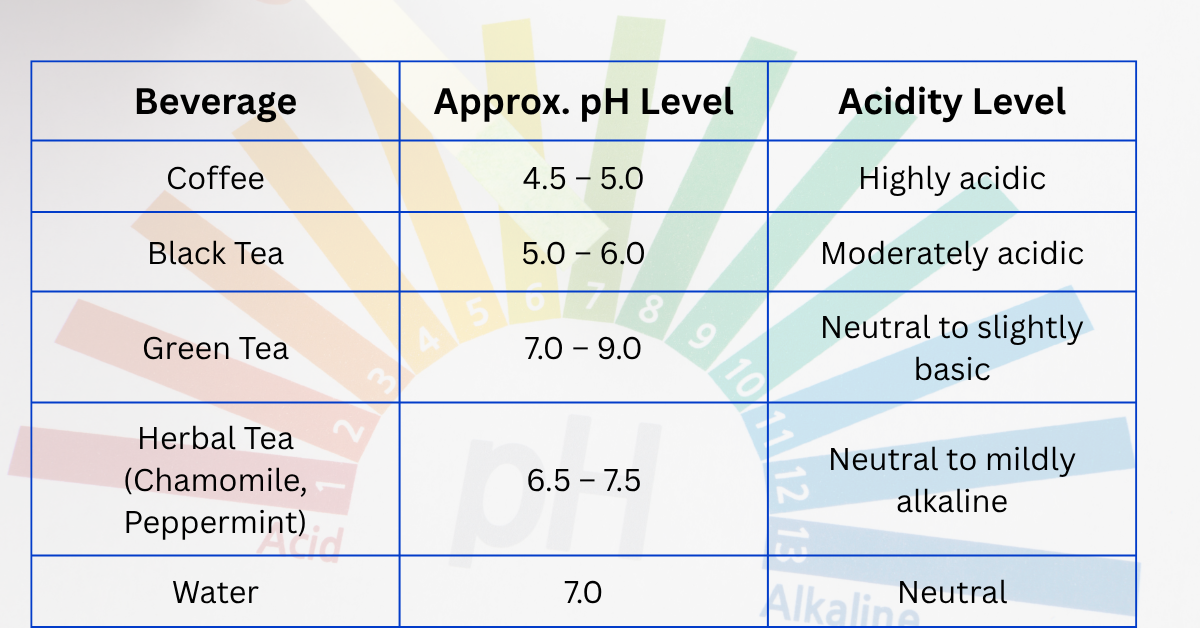
(Note: Values can vary slightly depending on brewing time, temperature, and tea variety.)
Why Green Tea Is Much Less Acidic Than Coffee or Black Tea
- Lower Caffeine Content
- Rich in Antioxidants (Catechins)
- Alkaline-Forming After Digestion
- Fewer Tannins
If you’re looking for other alkaline or stomach-friendly teas, consider:
- Chamomile Tea – soothing, anti-inflammatory, and nearly neutral pH
- Rooibos Tea – naturally caffeine-free and alkaline-forming
- Ginger Tea – helps reduce acid reflux and supports digestion.
- Lemon Balm Tea – mild, aromatic, and stomach-calming
Tips to Make Green Tea Less Acidic
If you have a sensitive stomach or struggle with mild acid reflux, small changes in how you brew your green tea can make a big difference.
Here’s how to make your cup gentler and less acidic — without losing its refreshing taste or health benefits.
- Use Lower Brewing Temperature (70–80°C)
- Keep Steeping Time Short (1–2 Minutes)
- Choose Japanese Sencha or Decaf Green Tea
- Add Honey or Milk to Balance pH
To make green tea less acidic — brew cooler, shorter, and lighter. Choose mild varieties and pair with soothing add-ons like honey or milk.
Green Tea’s Alkaline Effect Inside the Body
Why Green Tea Supports pH Balance
Green tea is rich in catechins and polyphenols — natural antioxidants that:
- Reduce inflammation in the gut
- Support healthy digestion
- Encourage balanced stomach acid production.
- Aids in the alkaline effect once processed by the body
Final Verdict – Should You Drink Green Tea for Acid Reflux?
So, is green tea a friend or foe for acid reflux? The answer: It’s your friend, when enjoyed wisely.
Benefits
- Gentle on the stomach (neutral to slightly alkaline pH)
- Contains antioxidants that soothe digestive inflammation
- Promotes healthy metabolism and detox
- Low in caffeine compared to coffee or black tea
Risks
- Can cause mild irritation if consumed on an empty stomach
- Over-steeping or too-hot water can make it more acidic.
- Excess intake may trigger reflux in very sensitive individuals.
Best Time to Drink Green Tea
- After light meals (morning or afternoon)
- Avoid right after spicy foods or on an empty stomach.
- Sip slowly and hydrate well throughout the day.
Summary
Green tea is one of the best beverage choices for people managing acid reflux or sensitive digestion, as long as it’s brewed correctly and consumed moderately.
About The Author